Background
49-year-old high school teacher, complained of shooting down the back of her left leg in a classic sciatica pattern. She’d get pain that ran right past her knee, and every so often, her leg would tingle. However on top of that, she also complained of pain and tingling at the front of her thigh. She tried conservative treatments that included a couple of chiropractor visits, stretching, rest, and some exercises she found online. Most recently she tried several sessions of physical therapy. The pain down the back of her leg eased up but not fully, and the front-of-thigh discomfort continued without improvement. She was frustrated with getting unclear answers from everyone. An important but overlooked part of her history was tummy tuck procedure she had several years earlier.
What Causes Thigh Pain and Tingling
Sciatica with symptoms that run down the back or side of the leg is almost always about some kind of lower lumbar disc issue, like a herniation or protrusion, pressing on the lumbosacral nerve roots. A disc herniation compressing on a nerve in the upper lumbar levels can present with front high symptoms.
However there are other causes and one of the least common such as compression or injury to the femoral nerve. Another overlooked contributor is when the lateral femoral cutaneous nerve (LFCN) gets trapped, leading to burning, tingling, or numbness in the front/side of the thigh. Interestingly postsurgical adhesion from abdominal surgery like a tummy tuck is a known risk for this.
Examination
Her exam revealed usual sciatica provocation plus an interesting pelvic presentation:
- On exam, she had some low back discomfort when moving her lumbar spine but front of the thigh symptoms weren’t responsive to movement. She was positive for sciatic nerve tension upon stress testing.
- Movement, Activities and Loads presented clear lumbar disc compression and nerve irritation for unsupported sitting postures and frequent stooping. However, the front thigh symptoms didn’t follow the same pattern and it was less clear.
- Neurologically, her strength and reflexes were normal, but less sensation on the front and side of her thigh.
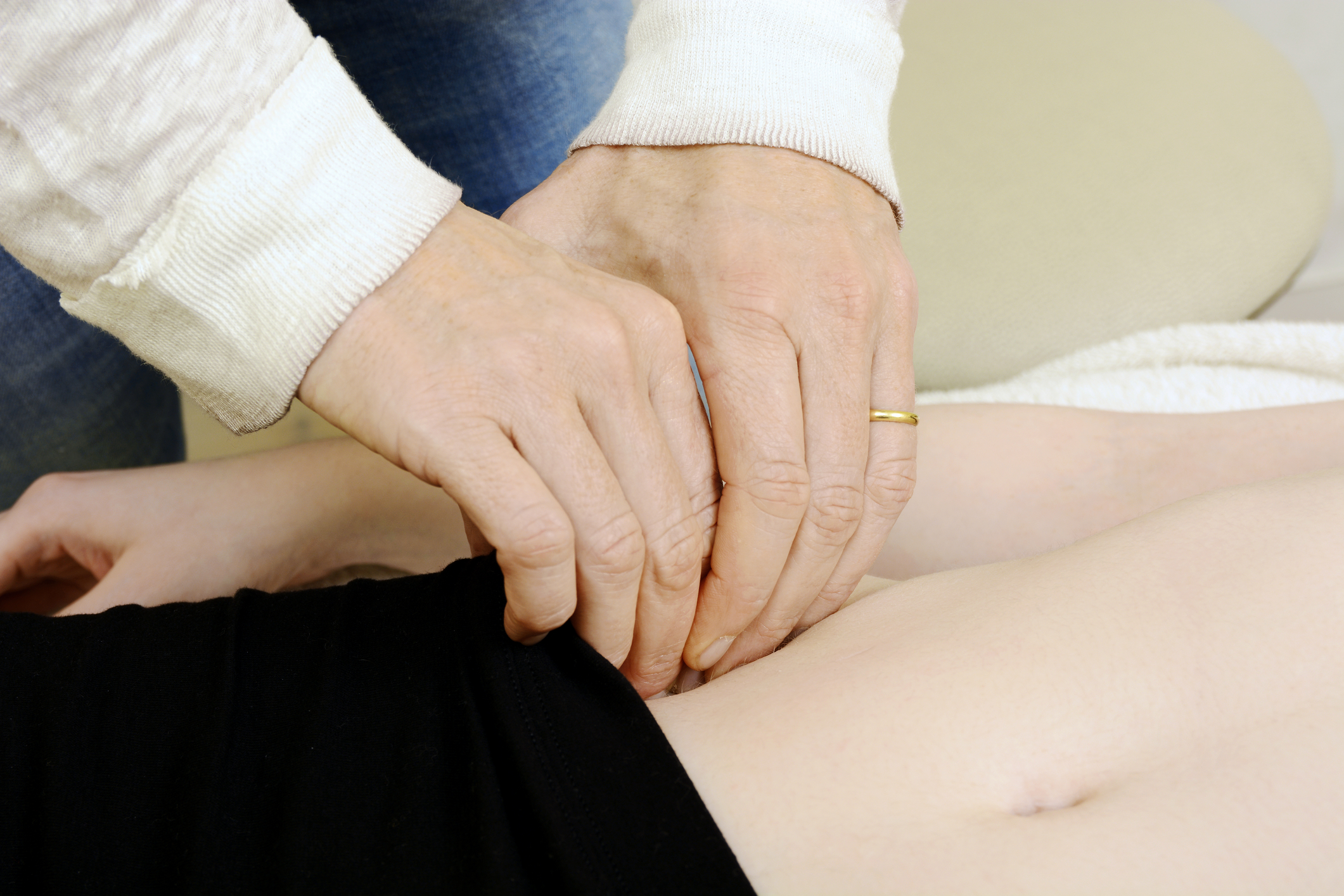
- Palpation revealed significant lower and left side abdominal tenderness. Which she wasn’t aware she had. A marked and local tender point in the lower left pelvis produced her thigh symptoms almost like a button.
- Neurological exam: normal strength and reflexes, but altered sensation in the anterolateral thigh
- Palpation: significant tenderness and tissue restrictions in the left lower abdominal quadrant, corresponding to previous surgical area
Treatment
She got directional-specific McKenzie exercises to centralize symptoms and reduce the disc herniation. She adopted our spine hygiene program to mitigate flare-ups and encourage disc healing. Core strengthening was added to reduce disc shearing and improve abdominal strengthening since she never worked on her core after the tummy tuck. Nerve mobilization exercises helped to release any adhesions that may be present from disc inflammation. Soft tissue manual therapy and targeted stretching of her pelvis and abdominal wall to break up adhesions.
She was given three laser therapy sessions to calm the sciatic nerve and accelerate disc healing. Manual therapy plus stretching was implemented to release the nerve adhesions in the front of her pelvis.
Outcomes
Her front thigh pain and tingling went away completely. The sciatica was more stubborn and required significant focus on spine hygiene to fully decompress the nerve and provide a healing environment for the disc since it was a chronic problem. She felt more confident moving around and going about her day. And she finally understood the importance spine hygiene and posture for preventing recurrence of sciatica symptoms.
Key Takeaways
This case is a perfect reminder that pain, numbness and tingling down the leg can have more than one source, and symptoms can overlap in ways that make diagnosing tricky. Sometimes what looks like sciatica is actually something else entirely. Spine hygiene and targeted core strengthening plays an important role to fully realize the healing potential of the back. Abdominal surgeries should be taken into consideration for unusual thigh symptoms.
References
1. Konstantinou, K., & Dunn, K. M. (2008). Sciatica: review of epidemiological studies and prevalence estimates. Spine, 33(22), 2464–2472.
2. Freemont, A. J., Peacock, T. E., Goupille, P., Hoyland, J. A., O’Brien, J., & Jayson, M. I. V. (1997). Nerve ingrowth into diseased intervertebral disc in chronic back pain. The Lancet, 350(9072), 178–181.
3. Genevay, S., & Atlas, S. J. (2010). Lumbar spinal stenosis. Best Practice & Research Clinical Rheumatology, 24(2), 253–265.
3. O’Sullivan, P. (2005). Diagnosis and classification of chronic low back pain disorders: maladaptive movement and motor control impairments as underlying mechanism. Manual Therapy, 10(4), 242–255.
4. Surkitt, Luke D., et al. “Efficacy of directional preference management for low back pain: a systematic review.” Physical therapy 92.5 (2012): 652-665..
5 .Harney, D., & Patijn, J. (2007). Meralgia paresthetica: diagnosis and management strategies. Pain Medicine, 8(8), 669–677.
6. Al-Dabbagh, A. K. (2002). Entrapment neuropathy of the lateral cutaneous nerve of the thigh (meralgia paresthetica): a study of 350 cases. Surgical Neurology, 57(1), 34–38.
7. Cortell-Tormo, J. M., García-Jaén, M., Pérez-Soriano, P., Llana-Belloch, S., & Martínez-Cava, A. (2019). Manual therapy and exercise for postsurgical adhesions and related pain: A review. Journal of Bodywork and Movement Therapies, 23(1), 60–66.
8 .Holanda, Vanessa Milanesi, et al. “Photobiomodulation of the dorsal root ganglion for the treatment of low back pain: A pilot study.” Lasers in Surgery and Medicine 48.7 (2016): 653-659.
9. Nazari, Jalil, Malcolm H. Pope, and Richard A. Graveling. “Reality about migration of the nucleus pulposus within the intervertebral disc with changing postures.” Clinical Biomechanics 27.3 (2012): 213-217.